
The Year-Round Nebraska Lawn Care Calendar
A great lawn is not the result of one big effort in the spring. It comes from doing the right tasks at the right time, month after month, in step with how your grass actually grows. In Nebraska, where lawns are made up of cool-season grasses that thrive in spring and fall, timing is everything. This year-round calendar walks through what your lawn needs in every season, so you always know what to do and when to do it.
Why Does Timing Matter So Much for Nebraska Lawns?
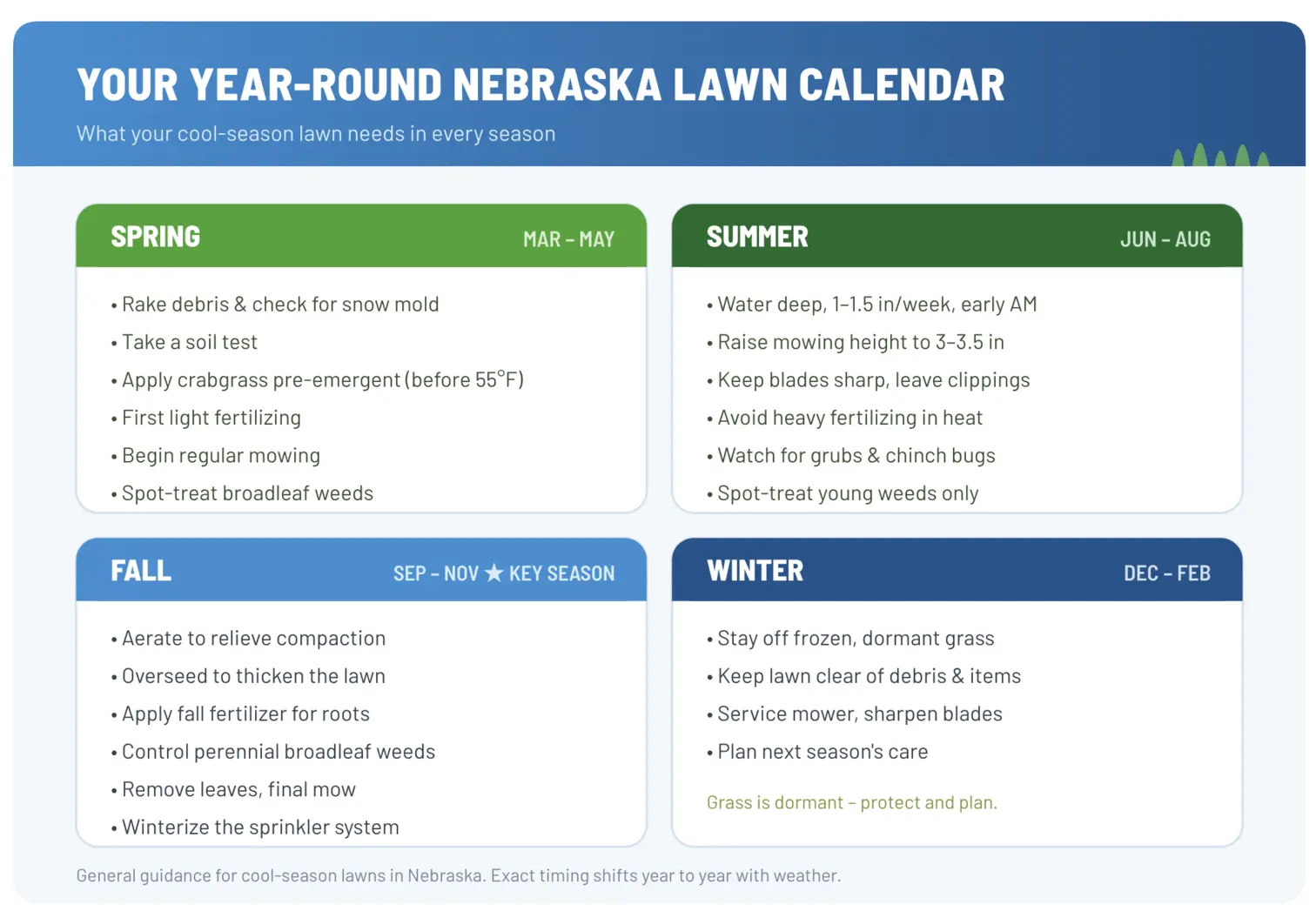
Timing matters because every lawn care task has a window when it works best, and doing the right thing at the wrong time often wastes effort or even backfires. Fertilizing during summer heat can stress the grass, applying crabgrass preventer too late lets the weeds through, and aerating at the wrong time misses the recovery window your lawn needs. When you align your care with the natural growth cycle of cool-season grass, every task you perform delivers more value, and your lawn stays healthier with less work overall. The calendar below shows how the full year breaks down.
What Kind of Grass Are Nebraska Lawns Made Of?
Most Nebraska lawns are cool-season grasses, primarily tall fescue and Kentucky bluegrass, and understanding how they grow is the key to the entire calendar. Cool-season grasses grow most actively in the cooler temperatures of spring and fall, slow down or go semi-dormant during the heat of summer, and rest through winter dormancy. According to UNL Extension, these grasses are best suited to Nebraska's climate, but their growth pattern means the most important work happens in spring and fall rather than the middle of summer. The chart below shows how their growth rises and falls across the year.
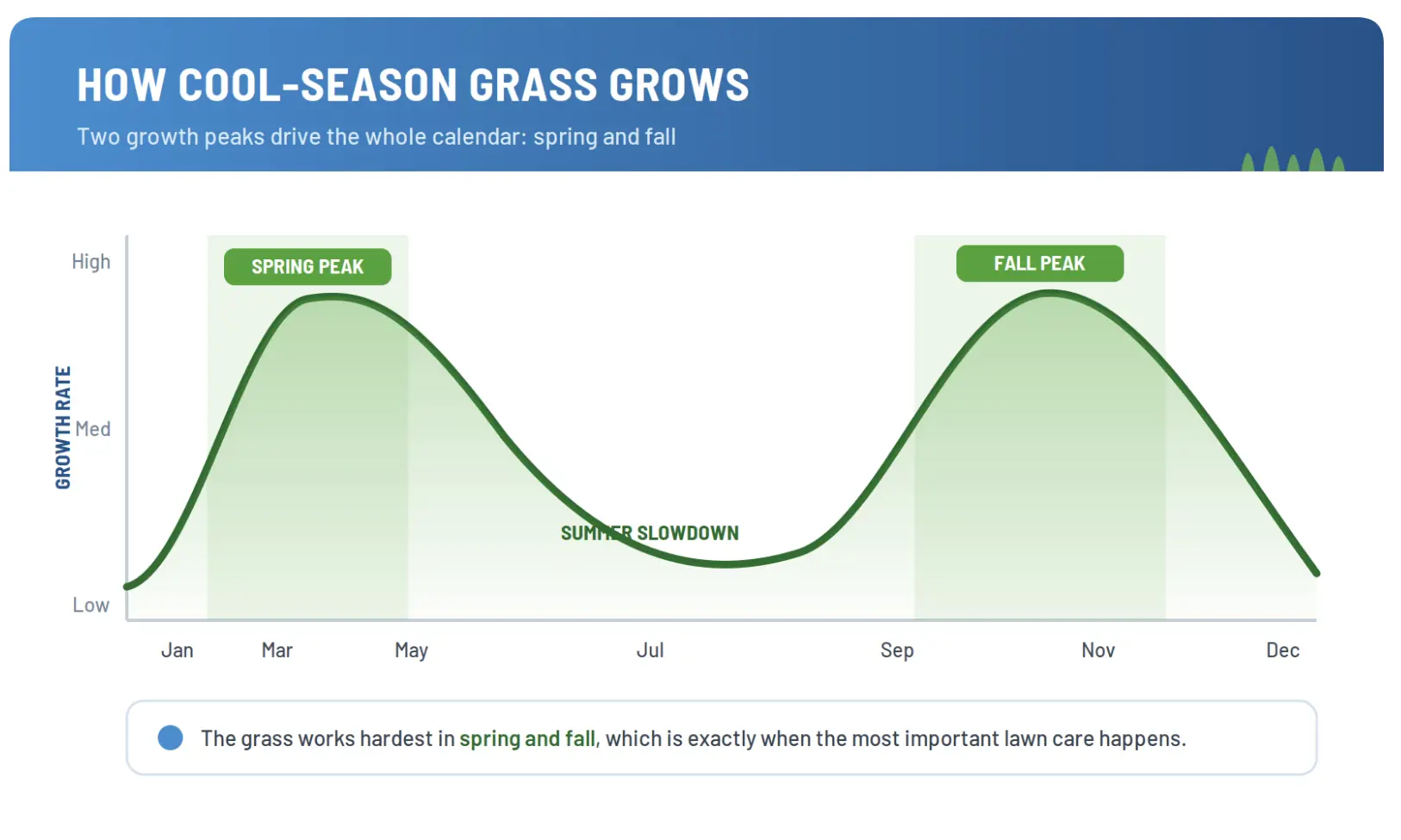
Once you understand this rhythm, the timing of every task on the calendar makes sense.
What Should You Do for Your Lawn in Spring?
Spring is the season for waking up your lawn, preventing weeds, and setting the foundation for the year. As the soil warms and the grass breaks dormancy, the focus shifts from cleanup to active care. The work divides naturally into early and later spring.
What Should You Do in Early Spring (March)?
Early spring is for cleanup and preparation before the growing season hits full stride. The soil is still cool, and the grass is just beginning to wake up, so the goal is to clear away winter debris and get ready rather than to push growth. Early spring priorities include:
- Raking out leaves, dead grass, and winter debris
- Checking for snow mold and matted areas
- Taking a soil test to guide your fertilizing
- Tuning up and sharpening the mower
What Should You Do in Mid to Late Spring (April and May)?
Mid to late spring is when weed prevention and the first feeding take center stage. This is the critical window for stopping crabgrass before it germinates, which happens once soil temperatures reach about 55°F. Key tasks for this stretch:
- Apply a crabgrass pre-emergent before the soil hits 55°F, generally in April
- Give the lawn its first light feeding as it greens up
- Begin mowing regularly, never cutting more than one-third of the blade
- Spot-treat broadleaf weeds as they appear
What Should You Do for Your Lawn in Summer?
Summer is about maintenance and stress management rather than aggressive growth, because cool-season grass slows down in the heat. The goal is to help your lawn survive the hottest months in good condition so it can recover strongly in the fall. Watering and mowing habits matter most during this period.
How Should You Water and Mow in Summer?
Proper watering and higher mowing are the two most important summer habits. Cool-season lawns need about one to one and a half inches of water per week, applied deeply and infrequently rather than in light daily sprinkles, and the mower should be raised to help shade the soil and conserve moisture. A few summer essentials:
- Water deeply two to three times per week, ideally early in the morning
- Raise the mowing height to around three to three and a half inches
- Keep mower blades sharp and leave clippings on the lawn
- Avoid heavy fertilizing during peak heat
What Problems Should You Watch for in Summer?
Summer is prime time for drought stress, weeds, and lawn-damaging insects. Grubs, chinch bugs, and sod webworms are all active in the warm months and can cause browning patches that are easy to mistake for drought. Keep an eye out for spreading brown areas that do not respond to watering, since those often point to insect activity rather than dryness.
What Should You Do for Your Lawn in Fall?
Fall is the single most important season for cool-season lawns in Nebraska, and the work you do now pays off all the way into next year. As temperatures cool, the grass shifts back into active growth and focuses on building roots and storing energy for winter. This is the ideal time for the heavy-lifting tasks that build a thick, healthy lawn.
What Should You Do in Early Fall (September to October)?
Early fall is the best time of year for aeration, overseeding, and fall feeding. The combination of warm soil and cooling air creates ideal conditions for new grass to germinate and for existing turf to recover and thicken. Early fall priorities:
- Aerate to relieve summer compaction
- Overseed to thicken the lawn and fill bare spots
- Apply a fall fertilizer to fuel root growth
- Control perennial broadleaf weeds, which are most vulnerable now
What Should You Do in Late Fall (November)?
Late fall is for the final cleanup and preparing the lawn for winter. As growth slows and leaves come down, the focus turns to clearing debris and protecting the system through the cold months. According to Nebraska Extension, fall after a light freeze is also the most effective time to control lingering perennial weeds. Late fall tasks include:
- Continuing to remove fallen leaves so they do not mat the turf
- Taking a final mow at a slightly lower height
- Winterizing your irrigation system before the first hard freeze
What Should You Do for Your Lawn in Winter?
Winter is the rest season for both your lawn and you, with the focus on protection and planning rather than active care. Your grass is dormant and should be left largely undisturbed, since walking on frozen or frosted turf can damage the crowns. Use the downtime to plan the year ahead, service your equipment, and keep the lawn clear of heavy objects that could smother or compact it. A few winter reminders:
- Avoid walking on frozen or dormant grass when possible
- Keep the lawn clear of debris, equipment, and parked items
- Service your mower and sharpen blades for spring
- Plan your care schedule for the coming season
How Can Heartland Lawns Help You Stay on Schedule All Year?
Here at Heartland Lawns, we have been keeping Nebraska lawns healthy through every season since 1990, and staying on schedule is exactly what we do best. Our multi-step lawn care program is built around the cool-season growth cycle, delivering the right treatment at the right time so you never have to track soil temperatures or guess at timing yourself. From spring pre-emergent and fall aeration to seasonal fertilizing and weed control, we handle the calendar for you. We are proud to carry BBB accreditation and were named the Best of Omaha 2025 first-place winner in lawn care, and everything we do is grounded in the values we call HEART: hard work, excellence, action, respect, and trust.
Contact us today for a free estimate and let our team keep your lawn on track all year long.